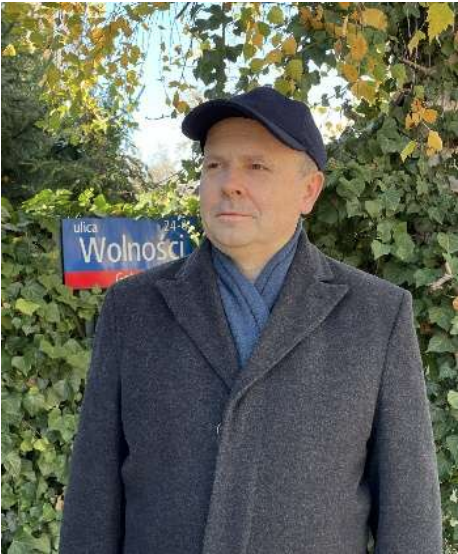
Grzegorz Klimczak (born in 1973 in Warsaw, where he still lives) belongs to the generation that experienced life under socialism, came of age during a long period of political transformation, and is approaching retirement at a time when the fruits of past hardships seem increasingly under threat.
His childhood was spent on a prefabricated housing estate, where he grew up in a devout, working-class and lower-middle-class environment. Significant factors in his biography include being raised by a low-earning teacher father and an overburdened mother, and his salvation from boredom by way of 8-bit computers and the local library. Another important element was the opportunity for frequent stays at his grandparents’ farm, which, if it weren’t for electric lights and the radio, would have resembled the farmsteads that can only be seen in open-air museums today.
These and similar experiences, quite common among the Polish Generation X, as well as events and encounters from the first decades of the 21st century, became the inspiration or illustration for much of the content of his first – and most likely only – book.
The author of The Trilogy of Economics gained a vague understanding of the economy and a master’s degree from the Warsaw School of Economics. He supplemented his education with a course for artillery platoon commanders at the now defunct Higher Officer School in Toruń. Despite having a certain inclination for exploring socio-economic issues, he abandoned them after graduation and started working in the logistics department of an international corporation. This position, quite prestigious at the time, brought him neither satisfaction nor professional success. A career shift into IT consulting enabled him to earn a satisfactory income and gave him the opportunity to travel frequently around Europe.
He got married at the age of 33. The relationship has lasted for over 20 years and there are many indications that it will continue until its once typical conclusion. At the age of 35, he became a father. The difficulties he encountered in adult life, along with various shattered illusions and mistakes made, forced him to reflect on the condition and effects of contemporary socio-economic life. Achieving a satisfactory stagnation in his professional career and having more free time allowed him to independently search for the answers to his various questions. Upon noticing that many of these answers could already be found in the work of Adam Smith, he began paying particular attention to classical economic literature. He considered the knowledge he had gathered to be so important, and so absent from public discourse, that he decided to popularise it himself by publishing a book.
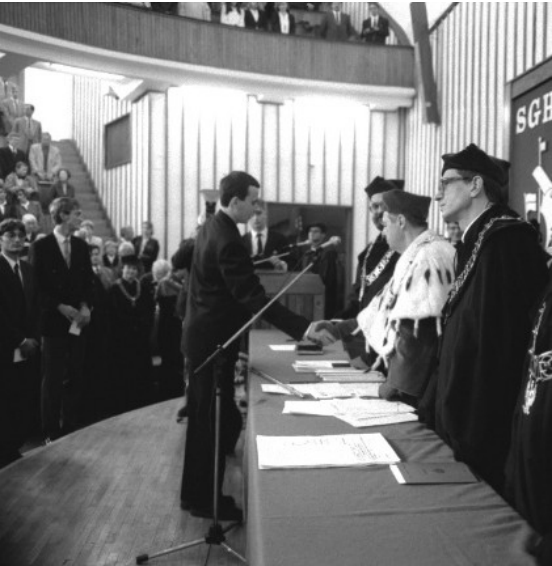
Image credit: SGH archive